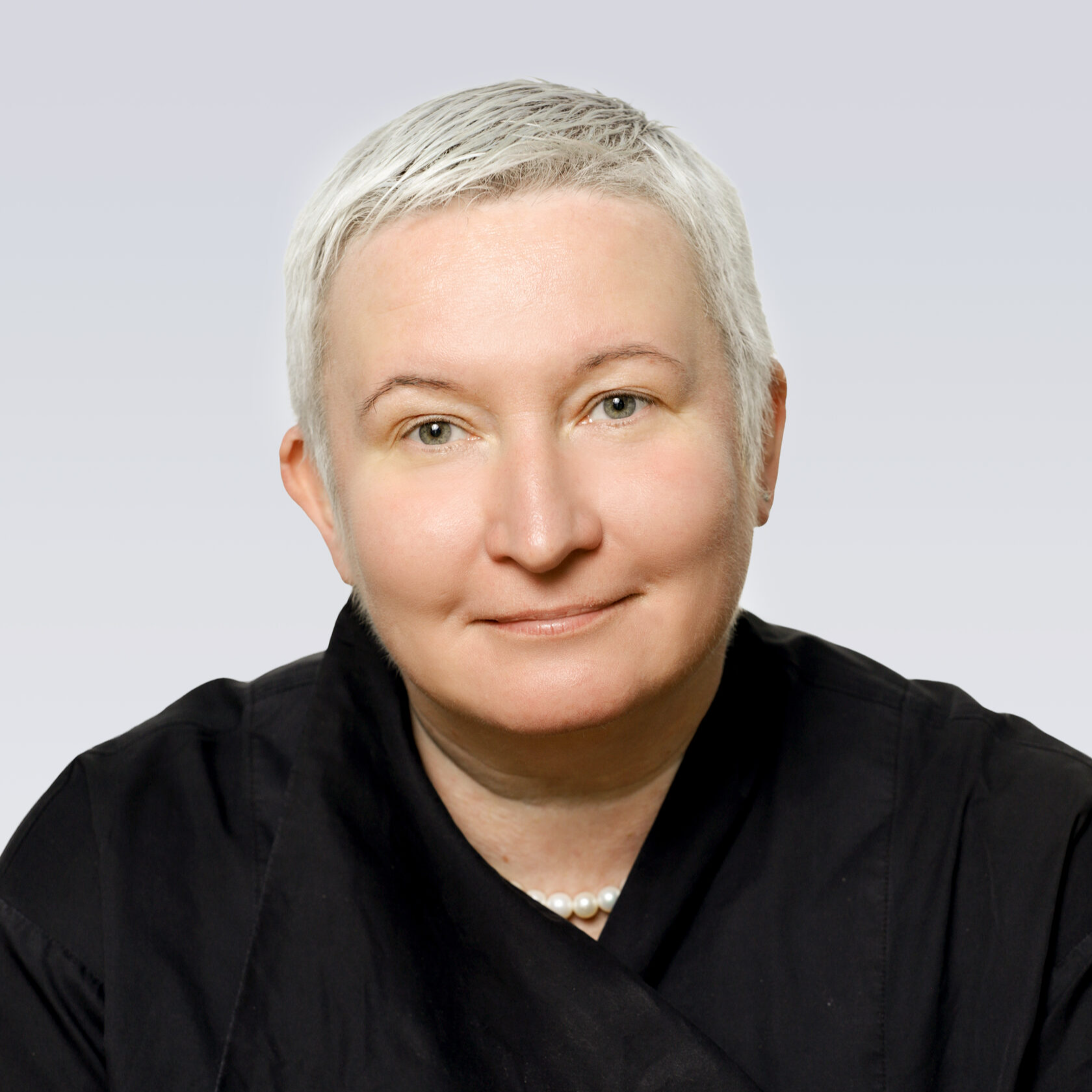
The global pharmaceutical market is becoming increasingly high-tech — the share of drugs with a new mechanism of action is almost half of all registrations. At the same time, manufacturers focus on narrower groups of patients. Executive Director of the Association of International Pharmaceutical Manufacturers (AIPM) Larisa Matveeva presented the analysis of FDA registrations. The expert observes the same trends in the Russian pharmaceutical industry. However, manufacturers still find it difficult to enter the EAEU countries — it has not yet been possible to create a unified space for pharmaceutical supply within the union.
Russian market and global trends
— What trends are shaping the global market for new medicines?
Today, the global pharmaceutical industry is increasingly focused on innovation. According to our analysis of FDA registrations for 2024-2025, the share of drugs with a new mechanism of action accounts for 43-48% of the total number of issued registration certificates. Oncology remains a consistently strong driver: antitumor drugs account for about 30% of new registrations. At the same time, the portfolio is changing qualitatively — it is expanding through targeted solutions for molecularly defined subtypes of tumors.
We also see that diseases that were previously perceived as widespread are being broken down into separate groups of patients with different biomarkers and therapeutic needs. Therefore, innovations are emerging not only in oncology but also in gastroenterology, cardiology, neurology, and immunology. At the same time, the market for biosimilars is developing: 2024 was a record year in terms of the number of such registrations — 19, compared to five the year before. This is an important part of more rational use of resources within the healthcare system.
We also see that diseases that were previously perceived as widespread are being broken down into separate groups of patients with different biomarkers and therapeutic needs. Therefore, innovations are emerging not only in oncology but also in gastroenterology, cardiology, neurology, and immunology. At the same time, the market for biosimilars is developing: 2024 was a record year in terms of the number of such registrations — 19, compared to five the year before. This is an important part of more rational use of resources within the healthcare system.
The low threshold for entering the “orphan” zone in the EU and the US is offset by other mechanisms that prevent the flow of orphan status applications. For example, in the US, with two mandatory orphan status criteria, according to various sources, there are about 6,000 statuses and 1,200 approvals. In the EU, where four criteria are provided, there are about 3,000 statuses and about 300 approvals.
In Russia, where only one criterion is in effect — the rarity of the disease — the number of statuses is related to the list of orphan diseases and the declarative nature of the procedure. The number of drugs with orphan status is in the dozens, with the list including over 200 orphan diseases.
— To what extent does the Russian market follow these trends?
In recent years, we have observed an increase in the number of clinical studies on bioequivalence. However, according to a survey of 24 major members of the association, conducted in 2026, international pharmaceutical companies continue to bring new original drugs to Russia. From 2021 to March 2026, members of the AIPM submitted more than 100 applications for the registration of original medicinal products. And these are not generic drugs or new dosages of already known medications — they are new developments.
Over the next five years, approximately 100 more applications are planned, including 15 drugs for the treatment of rare diseases. One in four molecules in the future portfolio is intended for the treatment of malignant neoplasms, and nearly 20% are intended for the treatment of neurological diseases. More than half of the drugs planned for registration are biotechnological and high‑tech; chemically synthesized drugs account for only about a third of this portfolio.
This means that the Russian market as a whole reflects the global transformation. But at the same time, it is becoming less “general therapeutic” and increasingly concentrated around complex, science‑intensive solutions for clearly defined patient groups. Such a transformation requires the entire healthcare system to be adequately prepared.
For priority innovations, one can consider a time‑limited inclusion in orphan lists with predetermined conditions and subsequent assessment of treatment outcomes in real practice. This will make it possible to provide access to patients more quickly while maintaining cost control and the ability to refine the decision based on accumulated data.
— What does the international pharmaceutical industry contribute to the healthcare system beyond drug registration?
The contribution of international companies has long been beyond the supply of medicinal products. We are talking about technology transfer, localization of production at Russian facilities, joint research work, the development of diagnostics, early access programs, and continuous medical education.
Today, companies are implementing more than 50 diagnostic programs with a value exceeding 2 billion rubles: 19 of them are focused on oncological, cardiovascular diseases, and diabetes. As part of early access programs, more than 20,000 patients received treatment before the drug's official registration, including over 8,000 patients with oncological diseases.
More than 6,000 educational events are held annually in 30 therapeutic areas. They involve more than 35,000 doctors from over 6,000 medical organizations in 80 regions of the country. It is essential for us that modern therapy should be accessible not only in the largest federal centers.
The Russian industry has already built a solid production base, and the next stage is to develop its own innovative competencies and technological partnerships. International experience, expertise, and cooperation do not contradict drug safety; rather, they strengthen it.
EAEU Market
— Can we say that over the past 10 years, the Eurasian Economic Commission has managed to create a single pharmaceutical market within the EAEU?
This path began in 2016 — a package of decisions was adopted, creating a unified supranational legal framework from scratch, replacing five national models. On May 6, 2017, the common market was launched de jure; a unified registration and examination procedure was being developed — a basic one and special mechanisms, including accelerated examination for orphan and high‑tech drugs. In 2020, the EAEU Pharmacopoeia was adopted. Uniform GMP rules and risk‑based inspection planning are being developed.
On August 24, 2026, Good Regulatory Practice (GRP) was adopted, providing for the implementation of international regulatory standards. We are now on the threshold of the next stage — the transition to risk‑based regulation of new groups of drugs: biological, orphan, high‑tech, and ADCs.
However, a gap still remains in the system at the level of orphan status, and the regulatory mechanisms for this class of drugs are not harmonized.
A strong pharmaceutical industry is built not on isolation, but on the consistent development of competencies, competition, and partnership.
— What's the problem?
Differences in national lists of orphan diseases and orphan status criteria create a barrier to the simultaneous accelerated registration of medicinal products in the countries of the union. In the absence of a unified procedure, orphan status is assigned according to national rules, which excludes the simultaneous application of accelerated and conditional registration procedures throughout the entire territory of the EAEU.
Only a uniform approach, effective legislative norms, and a clear mechanism for obtaining orphan status yield results. Obtaining orphan status as such does not guarantee the registration and subsequent market launch of a drug in the EAEU countries.
Only a uniform approach, effective legislative norms, and a clear mechanism for obtaining orphan status yield results. Obtaining orphan status as such does not guarantee the registration and subsequent market launch of a drug in the EAEU countries.
— What can be the solution?
Different national lists of rare diseases and orphan status criteria create a barrier to the simultaneous registration of a drug in all countries of the union. The absence of a unified procedure for assigning the status means that it is assigned according to national rules, which means that accelerated and conditional registration procedures cannot be applied simultaneously throughout the entire territory of the EAEU.
And most importantly: the next step is to submit a proposal to the EEC working group to create a unified procedure for granting orphan status in the EAEU. By analogy with the European experience: a single application — a single decision with recognition in all member states, while national specifics regarding reimbursement are preserved. This is the way to ensure that the EAEU common market expands patients’ access to modern therapy for rare diseases. This proposal will be considered by the EEC working group in the near future.
And most importantly: the next step is to submit a proposal to the EEC working group to create a unified procedure for granting orphan status in the EAEU. By analogy with the European experience: a single application — a single decision with recognition in all member states, while national specifics regarding reimbursement are preserved. This is the way to ensure that the EAEU common market expands patients’ access to modern therapy for rare diseases. This proposal will be considered by the EEC working group in the near future.
Source: Фармацевтический Вестник