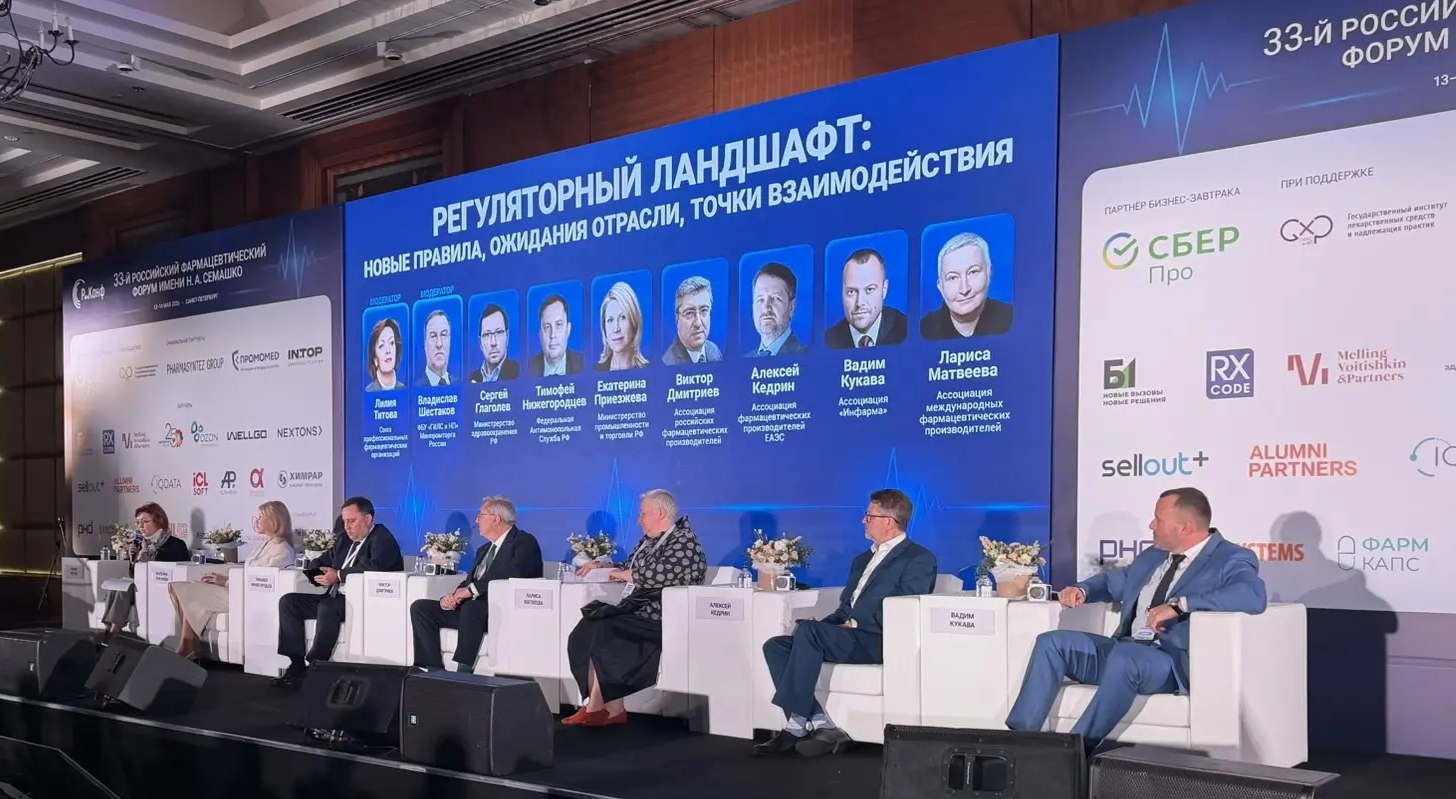
The Association of International Pharmaceutical Manufacturers presented an analysis of the share of molecules produced by Russian and foreign companies that are included in the VED list at the Semashko Russian Pharmaceutical Forum. According to analysts, 49 domestic-produced INNs and 74 INNs synthesized abroad were submitted for inclusion in the list of medicines in 2021-2025. In the first group, the share of positive decisions by the relevant commission of the Ministry of Health was 78%, while in the second group, it was 50%. The AIPM also estimated the average time from the moment of a drug's registration until it is included in the preferential programs. Patients have to wait the longest for access to innovations in the fields of hematology (41 months) and oncology (34 months). In reference countries, this indicator in the last group of drugs is 21 months.
In 2021-2025, Russian operators submitted 54 applications for inclusion in the VED List. Only 70% oh these were approved. Foreign regulatory approval holders submitted a total of 116 dossiers for inclusion in the list of 74 molecules. Only 32% of the applications were approved.
However, the AIPM concluded that domestic and international innovations are concentrated in different therapeutic areas. Thus, 17 of the 49 INNs submitted by Russian manufacturers for inclusion are antibiotics and antiviral drugs, six are drugs aimed at hematology and oncohematology therapy, and five are drugs intended for the treatment of cancer. Among international pharmaceutical manufacturers, the most popular areas were hematology and oncology, with 25 and 15 molecules proposed for inclusion in the list of essential medicines, respectively.
Russian patients have the fastest access to orphan drugs, with an average of 11 months between registration and inclusion in preferential programs in Russia. For antidiabetic drugs, this period is estimated at 22 months, and for drugs for cardiovascular diseases, it is 28 months.
The report also highlights the lack of consistency in the process of including drugs in clinical guidelines and the list of essential medicines. According to experts, 24% of the drugs recommended for inclusion in the list are not covered by the guidelines. According to the AIPM, in some cases, the long process of updating such protocols becomes an additional barrier to the introduction of innovative drugs into the national healthcare system.
Source: Vademecum
In 2021-2025, Russian operators submitted 54 applications for inclusion in the VED List. Only 70% oh these were approved. Foreign regulatory approval holders submitted a total of 116 dossiers for inclusion in the list of 74 molecules. Only 32% of the applications were approved.
However, the AIPM concluded that domestic and international innovations are concentrated in different therapeutic areas. Thus, 17 of the 49 INNs submitted by Russian manufacturers for inclusion are antibiotics and antiviral drugs, six are drugs aimed at hematology and oncohematology therapy, and five are drugs intended for the treatment of cancer. Among international pharmaceutical manufacturers, the most popular areas were hematology and oncology, with 25 and 15 molecules proposed for inclusion in the list of essential medicines, respectively.
Russian patients have the fastest access to orphan drugs, with an average of 11 months between registration and inclusion in preferential programs in Russia. For antidiabetic drugs, this period is estimated at 22 months, and for drugs for cardiovascular diseases, it is 28 months.
The report also highlights the lack of consistency in the process of including drugs in clinical guidelines and the list of essential medicines. According to experts, 24% of the drugs recommended for inclusion in the list are not covered by the guidelines. According to the AIPM, in some cases, the long process of updating such protocols becomes an additional barrier to the introduction of innovative drugs into the national healthcare system.
Source: Vademecum